About Children’s AIDS Fund International
The Children’s AIDS Fund International works to limit suffering caused by HIV disease for children and their families in the United States and around the world, by providing care, services, resources, referrals and education.
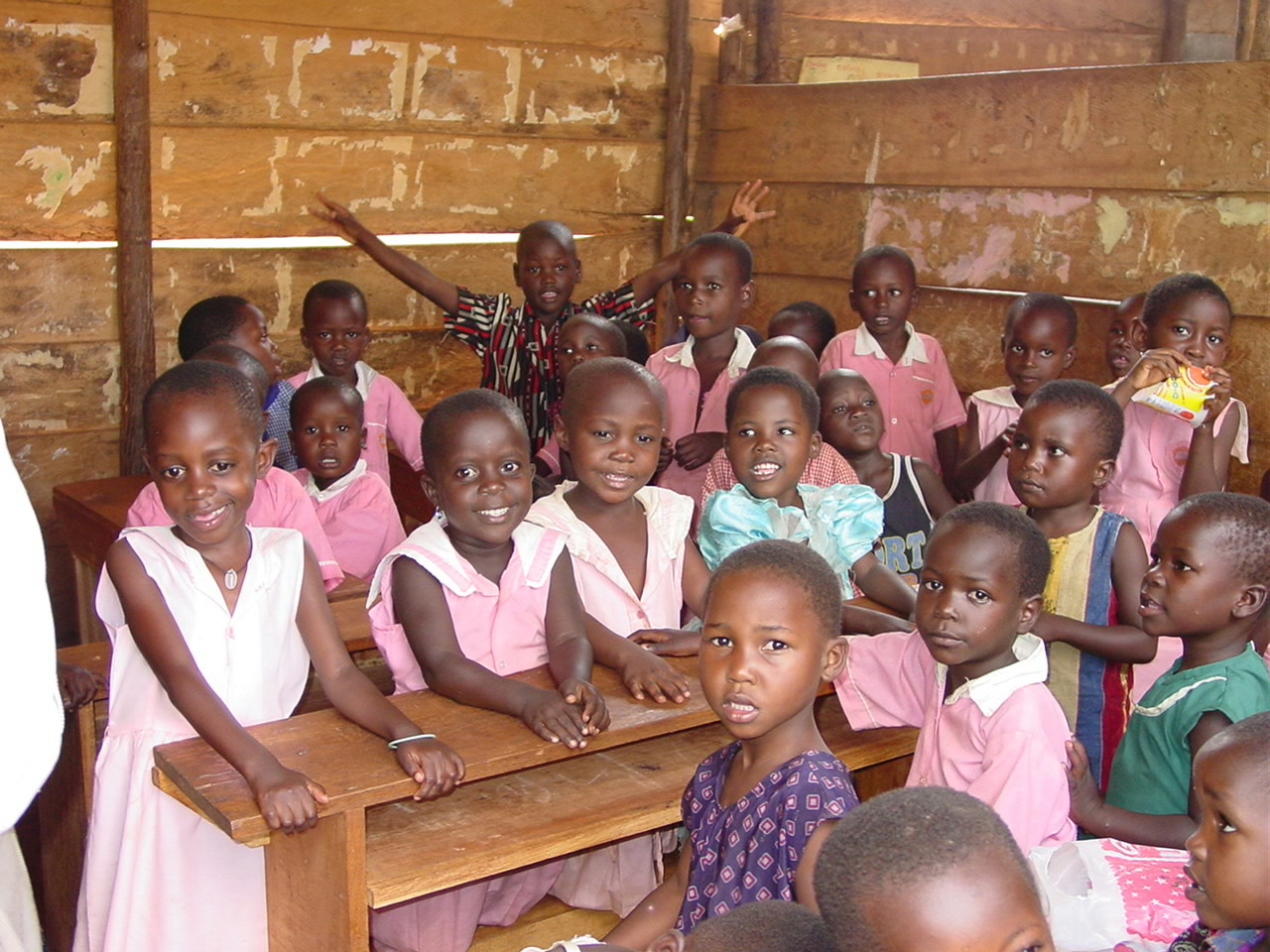 The Children’s AIDS Fund International’s goal is to limit suffering of HIV-impacted children and families around the globe. For more than 25 years CAF has modeled compassionate care; promoted public health principles to limit HIV’s spread; advocated development of diagnostics, treatments, vaccines and a cure; and worked to educate, equip and engage people of all ages and from all walks of life to be part of the HIV disease solution.
Our Goal: Limit the Suffering for HIV Impacted Children and Families with Tangible Relief.
Working with local partners in the US and abroad abroad, CAFI supports projects that bring tangible relief to HIV impacted children and families through treatment, care, financial assistance, education, psychosocial support, microenterprise, nutrition, and livelihood skills.
Focused on quality services and sustainability, CAF also provides mentorship and training to build local partner staff capacity in critical areas of program implementation, organizational governance and grant management to ensure successful and cost-effective, donor compliant implementation.
CAFI Was One of the First to Respond to the Crisis.
 An early respondent to the emerging spectre of HIV/AIDS, CAFI (know then as Americans for a Sound AIDS Policy) was one of the US government’s first eleven grantees under the “America Responds to AIDS” campaign in the late 1980s, with the mission of educating the faith-based community in the issue. In the 199os CAFI conducted a 10 state study of child and family-centered care under Ryan White Title IV program. In 2004, under the President’s Emergency Plan for AIDS Relief (PEPFAR) CAFI implemented a 5-year prevention grant that reached more than 360,000 youth ages 10-24 in Uganda, and managed treatment sites in Zambia, South Africa and Uganda providing care and treatment for more than 60,000 adult and pediatric clients.
This review provides a detailed overview of Boomessays, including information about its services, pricing, writers, payment options, guarantees, and overall legitimacy. It highlights the platform’s user-friendly layout, varied services, qualified writers, and fair pricing. However, it also mentions potential drawbacks, such as support challenges and email spamming. Overall, the review concludes that Boomessays is a legitimate service that delivers average quality work with a focus on unique content and timely delivery.
Donations from private foundations, corporations and individuals have supported direct services to families such as educational scholarships, nutrition support and housing assistance; building renovations for HIV clinic start-ups; community wide HIV awareness and youth prevention programs; support for local, state and national policy makers to develop comprehensive HIV strategies, public messaging and counseling and testing initiatives, and much more.
Your Donation Can Create a New Future for A Child and Family Devastated by HIV.
Background on Shepherd Smith
For 40 years, Shepherd Smith has been a leader in HIV/AIDS, youth development, maternal & child health, WASH (clean water, sanitation & hygiene), nutrition and other poverty-focused development assistance from a faith perspective. He has focused on providing a solid foundation for US government and private-sector funding of faith- and community-based organizations (FBOs) and (CBOs) as well as training domestic and global faith leadership in writing grant proposals to successfully compete for public- and private-sector support. As co-founder and former president (1986-1995) of Children’s AIDS Fund International (CAFI–formerly Americans for a Sound AIDS/HIV Policy) and current Board member, founder and president of the Institute for Youth Development (1995-2018), he played a key role in the development and long-term program strategy and implementation of the President’s Emergency Plen for AIDS Relief (PEPFAR) prior to its announcement by President George W. Bush in 2003, through its first 20 years of highly effective outcomes, spearheading advocacy efforts for its bi-partisan reauthorization in 2008, 2013 and 2018, spanning multiple USG Administrations. Despite valiant efforts for a bi-partisan PEPFAR reauthorization in 2023, some anticipating a new Administration that would reinvent PEPFAR’s goals, structure and scope successfully averted another 5-year bi-partisan reauthorization in anticipation of greatly curtailing the program and its global impact.An advocate for the foundational role the faith community plays in foreign assistance, Shepherd effectively finds common ground with those wanting to create better lives for people in all levels in the US and abroad. He worked tirelessly with a range of organizations and foundations seeking to amplify global faith leader voices in advocacy for poverty-focused development assistance and localization as the key to long-term impactful and sustainable programs. These efforts continue today through CAFI’s Faith for Life initiative. A nationally known expert on HIV/AIDS and youth development (youth risk avoidance of alcohol, drugs, sex, tobacco and violence for healthy futures), Shepherd has been sought out by national and faith-based media. His media appearances include, CNN, Fox News, CBS Evening News, ABC Evening News, Larry King Live, The New York Times, The Washington Post, The Washington Times, Christianity Today, ABC Radio, NBC Radio, NPR Radio, and Family News in Focus. His columns discussing timely issues related to youth development appeared in newspapers across the country. Under Shepherd’s leadership, IYD won the largest grant awarded by President George W. Bush’s Capital Compassion Fund program to educate community- and faith-based programs on how to successfully compete for US federal grants. Over the grant’s seven years, IYD trained more than 11,000 organizations and individuals in federal grant writing and assisted more than 500 organizations to win federal grants totaling over 500 million dollars.Shepherd has testified multiple times before Congressional committees, AIDS Commissions, the Food & Drug Administration, numerous federal committees and state legislatures on HIV/AIDS prevention, education and intervention strategies as well as risk-avoidance programs, particularly as they relate to America’s youth. A trusted colleague of many members and staff on Capitol Hill, Shepherd worked with Representative Tom Coburn, MD, and Library Court host Mike Schwartz during his first term in Congress to establish the Values Action Team (VAT), a monthly meeting of members and faith-based organizations to discuss priority issues of mutual concern. VAT meetings continue today in both the House and Senate. In 1987, under Shepherd’s leadership CAFI won one of 11 US organizations, including the American Red Cross, the AFL/CIO, and the National Education Association to receive the first USG grants on AIDS through the US Center for Disease Control’s (CDC) America Responds to AIDS (ARTA) campaign. ARTA launched nationwide education efforts targeting specific populations, including Surgeon General C. Everett Koop’s national household mailing. Under ARTA, CAFI was tasked with educating, equipping and engaging the faith community in AIDS. Efforts engaged the National Association of Evangelicals, National Religious Broadcasters, Evangelical Press Association, among thousands of churches, faith-based organizations and institutions in 49 of America’s 50 states. Educational resources developed included HIV/AIDS: A Challenge for the Church—co-produced with MAP International focused on local church AIDS policies and practices—and in 1991, the Smiths co-authored Christians in the Age of AIDS. Under President George H.W. Bush, CDC Director Bill Roper invited Shepherd to participate in a panel identifying the most effective public awareness STD (including AIDS) campaigns. At that meeting CDC experts explained that the biggest predictor of an STD—including AIDS—was number of lifetime sexual partners: More Partners=More Risk; Fewer Partners=Less Risk; One uninfected partner in a faithful lifetime relationship=No Risk. That primary public health message remains at the core of Smith’s prevention discussions today. Shepherd learned not all USG health experts understood that when he addressed the US State & Territorial AIDS Directors and no one knew the answer to that question. Under President Bill Clinton, Surgeon General David Satcher named Shepherd as a member of the Executive Committee for the Surgeon General’s Report on Sexual Health, published in 2001. Other collaborations with Dr. Satcher occurred during Dr. Satcher’s tenure as CDC Director and following his return to civilian life at Morehouse College in Atlanta. Under President George W. Bush, Secretary of Health & Human Services (HHS) Tommy Thompson appointed Shepherd to serve on the CDC Director’s Advisory Board (2001-2008) during Julie Gerberding’s tenure there. Shepherd first traveled to South Africa and Malawi in 1995 (the year after apartheid ended), at the invitation of a biotech company working on an AIDS treatment with researchers in South Africa. Discussions also took place with business and community leaders, Ministers of Education and Health, as well as visits with faith-based outreaches to AIDS orphans and HIV+ women outcast from their communities. They were challenging days where fear of AIDS was paramount and prevented any significant public dialogue. In 2002, Shepherd participated in two international trips with HHS Secretary Thompson. The first was a small group of 25, including 19 USG staff and 6 private sector delegates. They visited Ghana, South Africa, Mozambique, Botswana and the Ivory Coast. The second included more than 200 USG staff, HIV researchers, global health leaders, and private sector HIV-focused organization representatives. They visited, Zambia, Uganda, and Kenya. Shepherd also served as a US delegate to the United National Special Assembly on HIV/AIDS. In 2002, Shepherd led two delegations to Uganda—traveling at the invitation of the First Lady–to understand their unique global success in reducing the incidence of HIV/AIDS in their population through a nationwide public health prevention education campaign led by the President and First Lady promoting abstinence for youth until marriage, faithfulness for adults in marriage or relationships, and condom use for others not practicing primary prevention strategies. Also in 2002, Shepherd successfully won private funding to begin HIV/AIDS treatment in Africa. CAFI identified local partners in South Africa, Zambia, Malawi, and Uganda to expand their existing programming into HIV/AIDS treatment and care. Under President George W. Bush’s President’s Emergency Plan for AIDS Relief (PEPFAR)—launched in 2004—CAFI’s existing sites (with the exception of Malawi which was not part of PEPFAR’s initial focus) were incorporated into PEPFAR’s initial 15-nation program. Under PEPFAR, CAFI’s existing clinics expanded into 13 sites managed by the original three partners, serving more than 60,000 men, women, and children, receiving not only ARV treatment and family-centered care, but also training in nutrition and income-generating projects, education scholarships and other life-sustaining initiatives. Shepherd was appointed to a National Institutes of Health committee that oversaw the design and implementation of the National Longitudinal Study of Adolescent to Adult Health (Add Health), the largest, most comprehensive, nationally representative longitudinal study of adolescents ever undertaken. The first of six research waves occurred in 1994-1995; the full research and its findings are still in process today. Early published data focused on protective factors for youth. He and IYD staff hosted multiple Capitol Hill Briefings to bring key data on America’s youth to policy makers, as well as community and faith leaders. In 2008, Shepherd met the then Chair of the Moscow Duma’s Health Committee who was seeking resources and expertise on effective prevention messages for youth. He shared IYD’s resource materials with her, which resonated with their optimal messaging for Russian youth. This led to a collaborative effort initiated by a World AIDS Day conference for more than 500 physicians and researchers from Russia, Germany, India and Latvia, hosted by the Moscow Mayor, the US Ambassador to Russia and the Moscow AIDS Center. This led to IYD resources being translated and used in multiple settings with Russian youth, a well as an ongoing youth development and HIV/AIDS professional information exchange that took place over approximately five years with American expert teams led by Shepherd traveling to Moscow and Russian expert teams led by the Moscow AIDS Center Director to the US. Those professional relationships continue today. In addition, Shepherd served as an evaluator of youth programs on an Institute of Medicine committee of their Board on Children, Youth and Families in its presentation of the W.T Grant award for excellence in youth-serving programs. In 2015, he was invited to participate in a UNAIDS meeting on increasing male involvement in HIV/AIDS treatment and care programs throughout the world. In 2001 Shepherd was asked by the government of Japan to lead a delegation of 39 non-government organizations from the United States, Denmark, and the United Kingdom to Japan to focus on youth, the aging, and volunteerism. The two-week tour was extremely valuable for the Japanese who were able to utilize what they learned for dealing with various crises up until today. Prior to his work in HIV/AIDS and youth development, Shepherd was an insurance executive; Director of Donor Communications at Prison Fellowship—where he met Anita (now his wife–who was Communications Director; Donor relations and fundraising consultant for Family Research Council, Pat Robertson’s Freedom Council, and other non-profits. A political science major educated at Duke University and the College of William and Mary, Smith has always been engaged in policy development and advocacy, supported Paul Trible (R-VA) who won his first Congressional race in 1976, then went on to the Senate in 1982. In 2024, Friends of the Global Fight recognized Smith’s longstanding contributions over the last four decades by awarding him a Lifetime Achievement Award in Global Health. Shepherd Smith and his wife, Anita, reside in northern Virginia. Type your paragraph here
Anita Smith Background
Anita Smith is President of Children’s AIDS Fund International (CAFI), a non-profit, non-partisan organization founded in 1986, that works to limit suffering of HIV-impacted children and families. A CAFI co-founder, Anita actively managed and implemented US-based and global HIV/AIDS programs for the past 40 years. She oversees CAFI operations including program and grant management/reporting, and sustainability strategies; prevention education and resource development; treatment and care; support services; partner training, technical assistance and capacity building. In 1987, CAFI was one of 11 US organizations to receive the first USG grants on AIDS through the US Center for Disease Control’s (CDC) America Responds to AIDS (ARTA) campaign. ARTA launched nationwide education efforts targeting specific populations, including Surgeon General C. Everett Koop’s national household mailing. Under ARTA, CAFI was tasked with educating, equipping and engaging the faith community in AIDS. Efforts engaged the National Association of Evangelicals, National Religious Broadcasters, Evangelical Press Association, among thousands of churches, faith-based organizations and institutions in 49 of America’s 50 states. Educational resources developed included HIV/AIDS: A Challenge for the Church—co-produced with MAP International focused on local church AIDS policies and practices—and in 1991, the Smiths co-authored Christians in the Age of AIDS, published by Victor Books. CAFI’s focus on engaging the US and global faith community has been a cornerstone of its work over four decades and continues today in the Faith for Life initiative. Initially, CAFI’s primary focus was the US epidemic. Anita developed strategies and systems to serve HIV infected and impacted children and their families in partnership initially with State Departments of Health before AIDS services existed for women and children. As local services were developed over time, CAFI worked through care providers for HIV-infected children and their families to ensure everyone served was tied into credible and stable ongoing health care. CAFI’s Care Provider Network grew to more than 100 healthcare sites nationally (mostly large urban facilities) in addition to several hundred local support AIDS service organizations, through which CAFI provided emergency financial assistance for essential expenses and caregiver resources. In 1984, the number of children served annually reached a high point of 10,000 through CAFI’s holiday gift program. As services for HIV infected and impacted children and their families increased in the US, CAFI developed a manual for local healthcare facilities and service organizations to replicate CAFI’s hands-on, tangible assistance and support by tapping into local health systems as well as community, business and faith leaders. It was then that CAFI began to look at global needs. Anita first traveled to South Africa and Malawi in 1995 (the year after apartheid ended), meeting with business and community leaders, Ministers of Education and Health, visiting faith-based outreaches to AIDS orphans and HIV+ women outcast from their communities. In 2002, Anita participated in two delegations to Uganda led by Shepherd—traveling at the invitation of the First Lady–to understand their unique global success in reducing the incidence of HIV/AIDS in their population through a nationwide public health prevention education campaign led by the President and First Lady promoting abstinence for youth until marriage, faithfulness for adults in marriage or relationships, and condom use for others not practicing primary prevention strategies. Also in 2002, with private funding CAFI identified local partners in South Africa, Zambia and Uganda to expand their existing programming into HIV/AIDS treatment and care. Under President George W. Bush’s President’s Emergency Plan for AIDS Relief (PEPFAR)—launched in 2004—CAFI’s existing sites were incorporated into PEPFAR’s initial 15-nation program. Under PEPFAR, CAFI’s initial clinics expanded into 13 sites managed by the original three partners, serving more than 60,000 men, women, and children, receiving not only ARV treatment and family-centered care, but also training in nutrition and income-generating projects, education scholarships and other life-sustaining initiatives. Akso under PEPFAR , she managed a five-year community-based HIV/AIDS prevention grant focused on abstinence and behavior change for youth ages 10-24 in five Central Uganda districts. In addition to targeting youth, the program mobilized parents and community leaders, reaching more than 350,000 during the project period, which ended in 2011. Following the initial trip to Malawi in 1995, over time CAFI developed a long-term partnership with a rural faith-based hospital there. Since initially PEPFAR did not fund any projects in Malawi, CAFI’s support was possible through private donations. Over approximately 20 years, CAFI-raised funds provided: the initial HIV/AIDS expanded program including a high level of male involvement through nutrition efforts for families; a coordinated cadre of trained Community Health Workers in the 60-village catchment area who monitored health status in the community and communicated with the hospital for instructions; a fleet of bicycle ambulances placed in villages to facilitate transport to the hospital; a triage system designed by volunteer US medical students who also assisted with patients on site; construction of two houses for staff and volunteers working at the hospital; treadle pumps and piglets for patient support group gardening and piggery income-generating projects; an HIV risk avoidance prevention program for youth; and new pediatric and HIV/AIDS hospital wings, In 2015, the Smiths were invited to join a UNAIDS high level meeting on increasing male involvement in HIV/AIDS treatment and care programs were they presented this partner site’s model. In her tenure at CAFI, Anita has managed multiple US government and private sector corporate and private foundation grants ranging annually from $2,500 to $5 million focused on a wide spectrum of services for HIV impacted children and their families, including direct counseling, treatment and care, technical assistance/capacity building Board of Directors’ training, strategic and sustainability planning, grant proposal writing and more with both local FBOs and healthcare facilities as well as sub-Saharan African country government ministries. In addition, she was a primary researcher for USG’s HRSA Ryan White Title IV program evaluating unique needs in rural community health centers, and as a PEPFAR consultant on the DREAMS and faith-based programs. Anita was appointed to the Presidential Advisory Council on HIV/AIDS (PACHA) in 2002, under President George W. Bush and chaired the Prevention Committee until 2004, when she was appointed PACHA co-chair, a post she held until 2006. She was a member of the 2006 U.S. Delegation to the United Nations General Assembly Special Session on HIV/AIDS. In 2008, 2009 and 2011 she was an expert presenter on HIV prevention, family centered care and family HIV counseling, at an annual health conference sponsored by the Moscow Mayor, the Moscow Duma and the Moscow AIDS Center as part of a five-year US/Russia HIV/AIDS professional exchange initiative. Educated at Wheaton College (Illinois), Anita worked in communications for multiple faith-based groups and publications including Prison Fellowship as Communications Director (where she met her now husband Sheherd), the National Association of Evangelicals, the Evangelical Press Association, Today’s Christian Woman, Christianity Today’s Leadership magazines. Anita Smith lives with her husband Shepherd in Northern Virginia.